


A response to O’Mara’s July 9 “NY’s fast-tracked siting of solar panels raising alarms”
By James J. Bobreski
In his July 9 column, Sen. Tom O’Mara discovered two terrifying threats: solar panels might alter farmland, and discarded panels might someday release toxic metals in a landfill. Is Mr. O’Mara a special agent of C.O.N.E.?
C.O.N.E. means Concentration of Non-Essentials—the political art of magnifying a small, remote or manageable concern while ignoring a larger problem already occurring, especially when that problem is inconvenient to one’s preferred energy industry.
I always get misty-eyed when a Republican suddenly discovers environmental protection and public safety. My tears practically flooded the room as Mr. O’Mara worried about soil, drainage and groundwater. Curiously, those concerns become much quieter when coal, oil, gas or nuclear power enter the conversation.
Read NY State Senator O’Mara’s July 9 Column below:

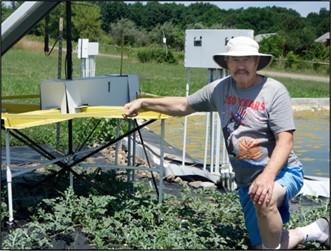
Ruin farmland? Oh, my goodness! This is my third season growing watermelons beneath solar panels. As a process control engineer, I designed the panels to rotate, divert water during heavy rain, shield plants during extreme heat and still deliver prime-time electrons to my batteries. The shade reduced sunscald and water demand. The protected plants produced mature fruit sooner than neighboring plants in full sun.
Let me help you out, Mr. O’Mara: solar and farming are not natural enemies. Agrivoltaics can preserve agricultural use while producing electricity. Good siting, drainage plans, decommissioning bonds and designs that allow grazing or crop production are reasonable requirements. Declaring farmland “ruined” simply because panels appear on it is political theater, not agricultural analysis.
Meanwhile, abandoned coal-mined land is not hypothetical. Acres damaged by extraction remain unproductive long after the coal company and its promises have departed. Somehow that genuine destruction inspires far less urgency than a removable rack of glass and aluminum.

Landfill emissions from solar panels? Oh no! A modern silicon panel is overwhelmingly glass, aluminum, silicon, copper and protective polymers. It may contain small quantities of lead-bearing solder or other metals, but those materials are encapsulated inside a weather-resistant laminate. Improper disposal deserves regulation and recycling—not an apocalyptic bedtime story.
Coal ash is the glaring comparison. It is produced by the ton and can contain arsenic, lead, mercury and cadmium in material readily exposed to water. Yet Mr. O’Mara’s warning siren sounds for the comparatively tiny amount sealed inside a solar module. C.O.N.E. strikes again.
Solar panels are also largely recyclable. The obstacle is not that the materials are impossible to recover; it is that our “free market” often finds dumping cheaper than doing the responsible thing. The answer is a recycling and producerresponsibility system—not pretending the panel itself is an environmental demon.
Then Mr. O’Mara asks us to be impressed by the federal letter signed by Brooke Rollins, Lee Zeldin and John Rich. Rollins has an agriculture degree but little hands-on farming experience. Zeldin is a politician, not an environmental scientist, and is an enthusiastic advocate of fossil fuels and nuclear power. Rich is a country singer appointed “Special Envoy for the American Landowner” after fighting federal action affecting his own property.
This is not exactly a blue-ribbon panel of agronomists, soil scientists, hydrologists and waste engineers. It is more like a political chorus singing from the same songbook. Rich dislikes federal intrusion when it reaches his land; the president disliked wind turbines when they reached the view from his Scottish property. Their environmental concern appears highly sensitive to whose scenery, profits or politics are involved.
Yes, industrial-scale solar should be carefully sited. Protect prime soils. Require drainage controls, responsible construction, recycling plans and funds for removal. Encourage designs that keep farmland productive. Apply the same honest accounting to coal, oil, gas and nuclear power including their mines, waste, water use, accidents and abandoned sites.
Mr. O’Mara says he wants answers, accountability and transparency. Here is the answer: compare all energy sources by the same standard. Regulate real risks rather than inflating convenient ones. And stop concentrating on nonessentials only when the subject is solar or wind.

James J. Bobreski is a process control engineer and the Democratic candidate for New York State Senate, 58th District.