


Students create first in-depth, interactive map of ‘forever chemicals’ in the Finger Lakes
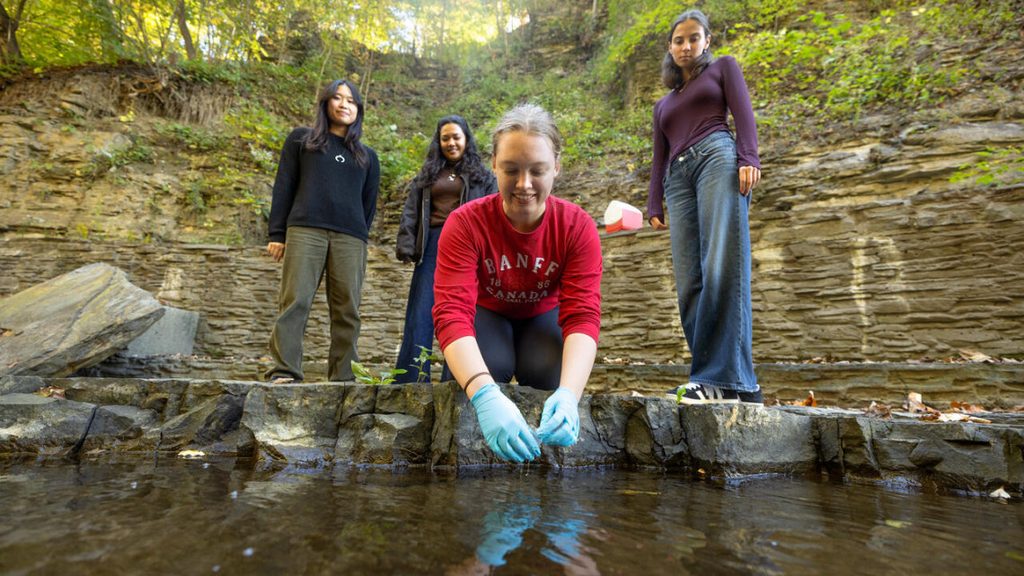
By Caitlin Hayes, photo by Sreang Hok, students in the Cascadilla Gorge on Oct. 6.
In 2023, Professor Damian Helbling was getting a lot of calls and emails from local residents. The Environmental Protection Agency (EPA) had just announced regulations to limit per- and polyfluoroalkyl substances (PFAS) – some of which have been linked to cancers and other negative health effects – in drinking water. Ithacans and others in the region wanted to know about levels in the ponds, lakes, streams and creeks in their proverbial backyards.
“Anybody in the public could just search online for ‘PFAS’ and ‘Cornell,’ and they would find me,” said Helbling, professor of civil and environmental engineering in the Cornell Duffield College of Engineering. “But I had no idea how to answer their questions. There were no data locally.”

A group of undergraduates in Helbling’s research group has since filled the gap, taking more than 500 samples across 300 bodies of water, including all 11 Finger Lakes and many tributaries, ponds and even puddles that persistently pool after rain. They’ve screened the samples for 24 common PFAS and added the data to an interactive map. The map shows PFAS hot spots but also relieves some fears: Overall the concentrations of PFAS in the Finger Lakes are relatively low.
“There was definitely relief knowing that generally we’re not seeing elevated levels across the region,” said Alex Van Den Hende ’25, M.Eng. ’25, who first created the map’s infrastructure with Helbling’s mentorship. “We saw that relief in the public’s response but also concern that there is in fact contamination – that maybe you’re not immediately affected, but there’s potential for more significant impacts in the future.”
READ THE FULL ARTICLE FROM CORNELL UNIVERSITY HERE
What are PFAS?
Per- and polyfluoroalkyl substances, also widely known as PFAS, are a group of man-made chemicals produced for their unique chemical properties. Definitions for classifying PFAS can vary widely, resulting in thousands to millions of different PFAS species. However, most human-utilized PFAS share some similarities in physical properties, including non-degradability, anti-stick, water resistance, heat resistance, and more.
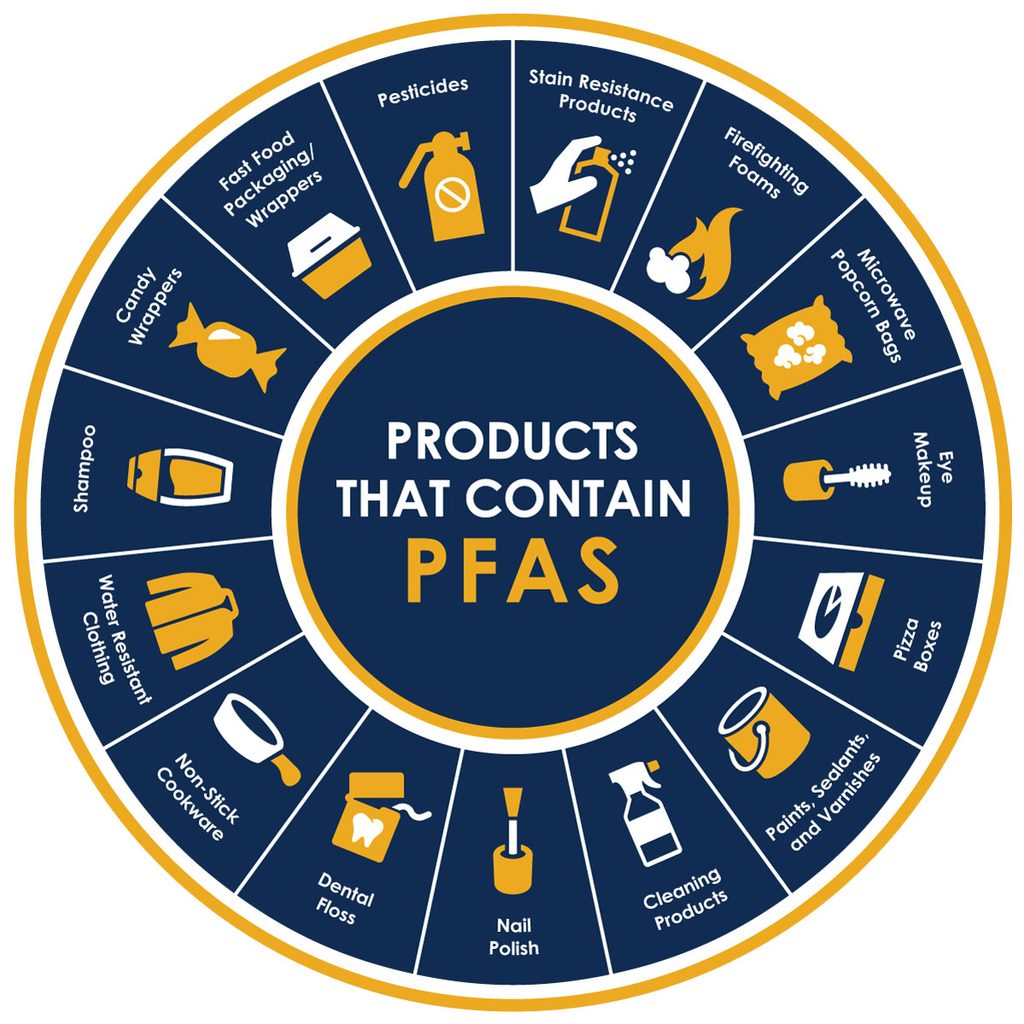
Some common items that contain PFAS include non-stick cookware, cleaning products, and rain jackets. More can be found in the image below:
=