

History in Two Voices / September 14, 2026
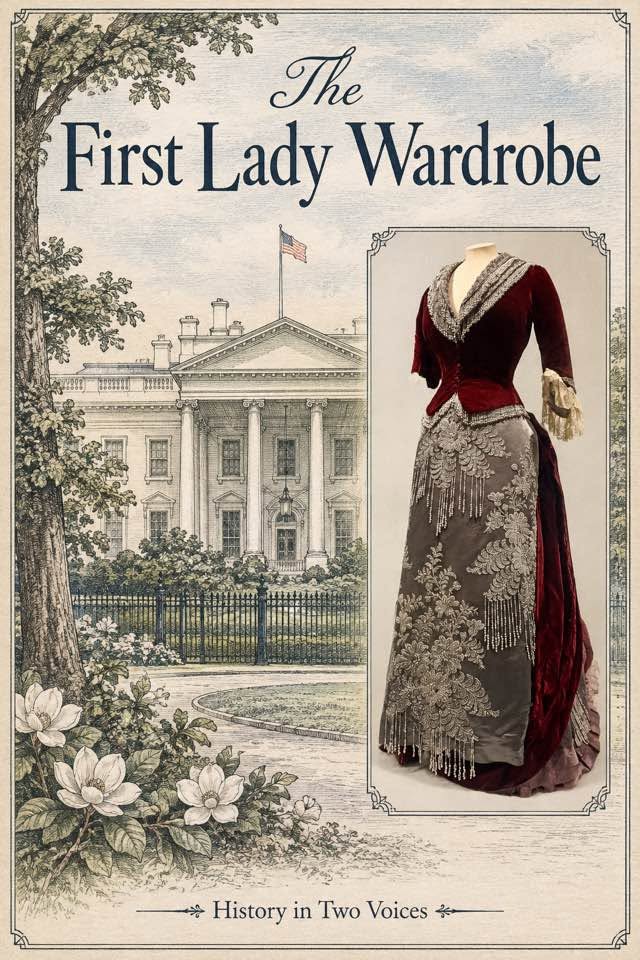
“Modest” is probably not the first word that comes to mind when you see this dress.
Yet Caroline Scott Harrison, First Lady from 1889 to 1892, was praised by the Philadelphia Times for her modest wardrobe and called a “sensible exemplar for American Women.”
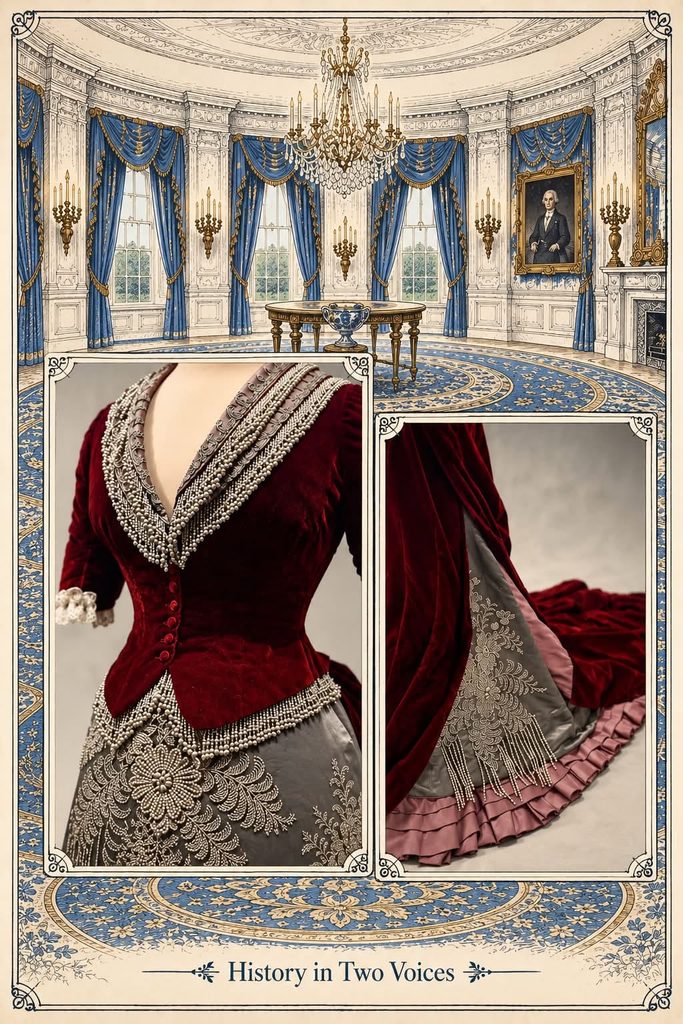
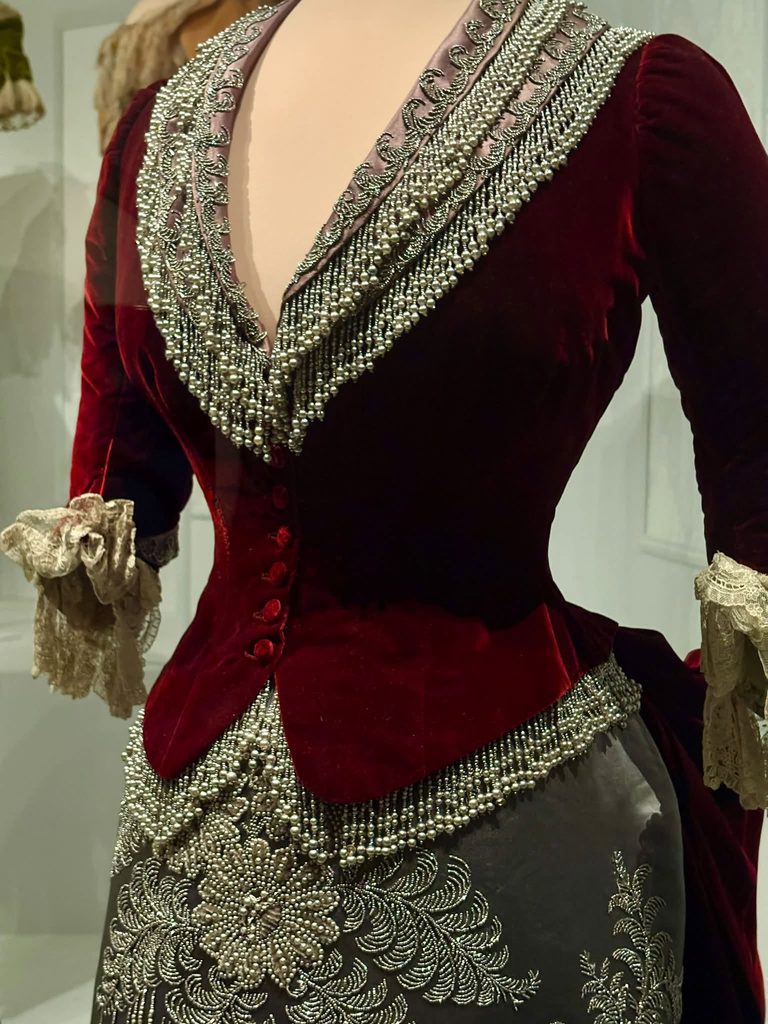
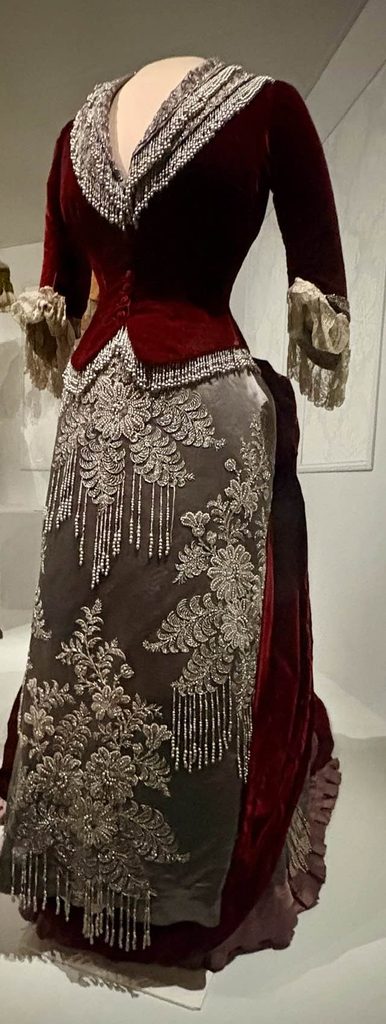
Then there is this extraordinary evening gown.
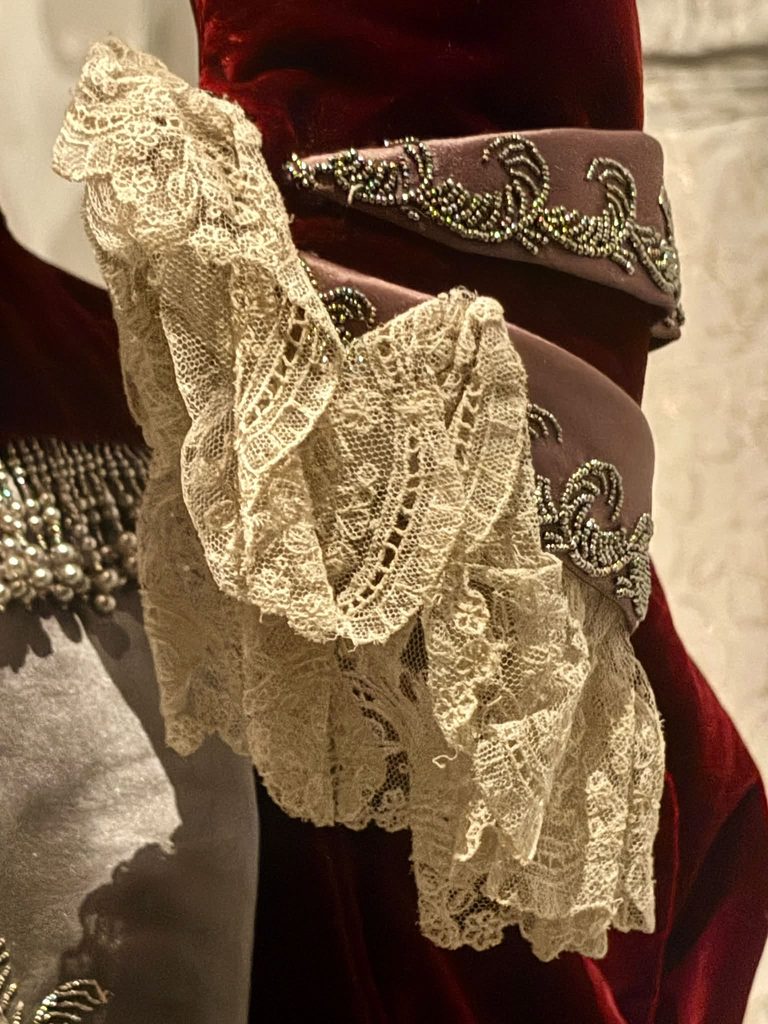
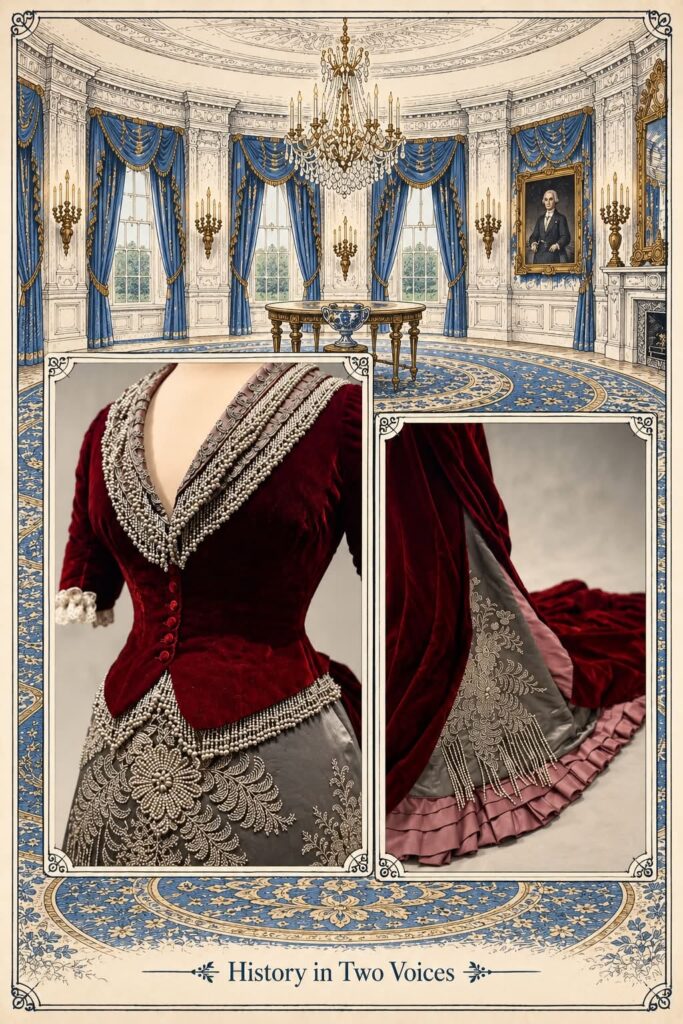
Made of burgundy velvet and gray satin, the gown is embroidered in a floral design with gray pearls and steel beads. Up close, the workmanship is remarkable. Beading cascades around the neckline and waist, while elaborate floral patterns spread across the gray satin. Long strands of beads would have added movement and shimmer as Harrison walked. The deep burgundy velvet provides a dramatic contrast.
There was also politics woven into Caroline Harrison’s wardrobe.
Following President Benjamin Harrison’s “America First” economic policy, the Smithsonian notes that her inaugural gown and the rest of her wardrobe were made in the United States. Clothing could be beautiful, personal—and public messaging.
We recently photographed this gown at the Smithsonian’s National Museum of American History, including the wonderful details that are easy to miss when viewing the dress as a whole.
This is the first installment of our new History in Two Voices series, The First Lady Wardrobe: History Worn in Public, where we’ll take a closer look at First Lady gowns and the history they carried with them.
What catches your eye first—the burgundy velvet, the extraordinary beadwork, or that train? 

Photographs: History in Two Voices, taken at the Smithsonian National Museum of American History. Museum information from the exhibition label.
Learn more about History in Two Voices on Facebook