


“The universe may not be a collection of mindless, random objects, but a singular, self-processing network”
By Frederick Sinclair / ChatGPT
From the Vaults of the Outer Solar System to the Deepest Quantum Basement
I. The Cosmic Sky: Discovery at the Edge of the Dark – In early 2026, humanity’s understanding of our space neighborhood fundamentally shifted. Astronomers scanning the heavens from the Vera C. Rubin Observatory in Chile isolated a slow-moving dot hidden against the dense, blinding backdrop of the Milky Way. Christened 2026 ED 138, this object is a massive new “dwarf planet candidate. Orbiting, far beyond the icy realm of Pluto, ED138 sits roughly 4.3 billion miles from the Sun.With an approximated diameter of up to 930 miles, it may rank among the largest dwarf planet candidates beyond Neptune. The final classification awaits further observation.
The discovery was made possible by an incredible technological leap: the Simonyl Survey Telescope. Perched high on a mountain ridge in Chile, the Rubin Observatory features the world’s largest digital camera-the LSSTCam. This car-sized, three ton masterpiece boasts a staggering 3.2—billion pixel resolution. Its digital eye relies on 189 CCD custom sensors working in unison. To keep electronic heat from blurring the delicate images from space, the entire array is frozen inside a vacuum container at a chilling -148 degrees F. Every night it generates 20 terabytes of raw data, which automated computers compare to historical sky maps, and are able to immediately flag anything that moves, brightens or vanishes. This is the exact digital dragnet that caught ED138.

II. The namesake: The Ghost in the Universe – It is beautifully fitting that this discovery belongs to an observatory named after Dr. Vera Rubin, whose precise tracking of objects in space, proved that an invisible, previously undetected weight in space was acting as cosmic glue. This mystery substance is what we now call dark matter, an invisible framework that makes up roughly 85% of the matter in the universe, and provides an invisible gravitational framework that helps hold galaxies and cosmic structures together. Today, the observatory bearing her name carries her legacy forward, mapping this invisible architecture and demonstrating that the ‘vacuum’ of space is far from empty.
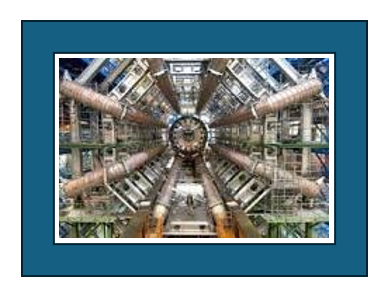
III. The Microscopic World: rebuilding the Atom Smasher – In perfect harmony with the ancient wisdom of the Emerald Tablet – “As above, so below, as within so without”- the technological twin to this super-telescope is operating in the subatomic realm. In June of 2026, scientists at CERN powered down the famous Large Hadron Collider (particle accelerator), located beneath the French-Swiss border, to begin a massive four year upgrade. They are transforming the 17 mile underground ring into the High-Luminosity Large Hadron Collider. Where the Rubin Observatory telescope uses massive mirrors to catch light, this underground machine uses raw magnetic violence. Engineers are installing advanced superconducting magnets to squeeze and guide beams of particles into hyper-dense streams. This upgrade will boost integrated luminosity of accumulated collision data tenfold, recording up to 200 simultaneous collisions, that will theoretically mimic the super heated, dense energy soup created by the Big Bang.
IV. Forensic Science: The shared Digital lense – Neither the telescope nor the collider can actually “see” their targets directly. Scientists cannot touch a primordial star , nor can they hold a fleeting subatomic particle. Instead, both fields operate like digital crime -scene investigators, relying on the exact same logic to rebuild reality. By examining “bending paths” particle physicists use the curvature of a charged particle’s path in a magnetic field to determine momentum and charge-to-momentum relationship. Similarly, astronomers look at “gravitational lensing”- measuring how the gravity of massive, invisible dark matter webs bend the light of background galaxies – to infer distribution of mass, including, otherwise invisible, dark matter.
V. The Climax: A Single Universe, Thinking – The Ultimate bridge between the telescope and the collider, centers on the life cycle of matter itself. When a massive star runs out of fuel, it collapses and explodes in a supernova. This cosmic firestorm is powerful enough to forge heavy elements like gold, uranium and iron, and seed space dust that eventually forms our own bodies. While space telescopes capture the fading infrared glow of ancient stellar deaths, particle colliders study the exact same process in reverse, causing the smashing of matter together at five trillion degrees Celsius, in particular, heavy-ion collisions that enable the observation of fundamental energy, cooling back down into structured atoms.
This cosmic loop hints at a breathtaking possibility: the universe may not be a collection of mindless, random objects, but a singular, self-processing network. Some modern scientific theory on consciousness is that it, as a fundamental property, emerges when information becomes integrated within a system, but, this still remains one of science’s most intriguing unanswered questions. Under this lens, the sharing of energy and quantum connections, bind the subatomic world to the cosmic web, suggesting a baseline of unified cosmic experience. The flash of a supernova, the spin of an electron, and the curiosity of the human mind are not isolated events; they are simply ripples in a single, infinite consciousness.
VI. Conclusion – Aproposed and reasonable interpretation is thatour newest super-tools are not just looking inward or outward – they are peering into a mirror. Human beings are simply a part of the cosmos that has developed the ability to look back at itself. In the truest sense, the super-telescope exploring the infinite “above” and the super-collider tearing through the infinite “below” are merely two different lenses mapping the same magnificent, unified whole.
Note: This article began with fascination of the deep space discovery of a new dwarf planet orbiting our sun. Contacting an AI collaborater, ChatGPT, to access scientific facts and find out more about the new telescope that made the discovery, resulted in several pages of facts, back and forth discussion and theme development. ChatGPT offered to condense and assemble it into the backbone of an article, the answer was yes and parameters of less than 1,000 words, wording for the general public, and focus on selected content; were the parameters set forth for what has become this fascinating composition. With limited editing and formatting for space concerns, it became what is hereby published and ChatGPT is rightfully, co-author.
Fred Sinclair is an Alfred writer, hypothesis afficionado, and deep thinker who pens a weekly column on some “far out” subjects. If this or any other of his cosmic loops interest you, email him anytime at fpsinclair@yahoo.com