


WATCH and LISTEN: Peepers peeping
By Bob Confer,
After the winter we had, it’s incredibly enjoyable to once again hear birds singing. Our avian friends that we too often take for granted – like robins and cardinals – are providing us a chorus of beauty and cheer.
Western New Yorkers’ ears have also been blessed by another melody, but from an entirely different creature – a diminutive amphibian. That would be the spring peeper.
Late-March to late-April marks the breeding season for peepers in the northern portion of Western New York. The southern half, especially closer to the Pennsylvania border, might have peepers breeding into mid-May due to the cooler temperatures associated with the higher elevations and the deep valleys.
While this breeding season is underway, peepers court one another with, well, peeps. If you live near a pond, marsh, or slow moving stream, head outdoors a few hours before sunset and for forty minutes after. That birdlike “pee-eeep”, a half-second long in duration, is a sound comes from these male treefrogs.

If that watering hole is the pick-up joint for dozens if not hundreds of peepers, the collective sound (which some have compared to sleigh bells) is amazing. Together, it becomes a high-pitched trill which can be deafening. To prove my point, a few years back I brought home from work my noise meter to measure how loud their calls are. The cumulative chorus at our pond was overwhelming, exceeding 95 decibels. If you worked in such an environment OSHA would mandate hearing protection.
You might occasionally hear a lone spring peeper in October, too. Herpetologists call that the fall echo. Some peepers react to the sunlight and temperatures being like that of the spring. And, with hibernation coming up, their bodies are already preparing for mating that comes right after they thaw out.
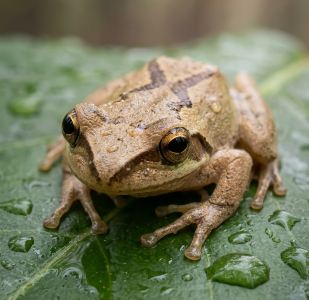
It’s truly amazing how much sound can come out of a creature so small. Spring peepers are three-quarters of an inch to an inch-and-a-quarter in length. They are wee animals, far smaller than their cousins, the toads and frogs (as a matter of fact, most frogs could eat them). They are light brown to grey with a dark diagonal cross or “x” on their back.
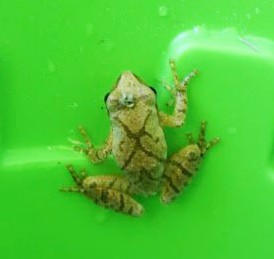
You’ve likely never seen a spring peeper – they are not only small, but they are timid. If you get too close to their breeding pond, they will stop singing and hide.
Next month, when they are done increasing their populations, the peepers will leave those ponds and head into the woods to climb trees and grasses to spend the rest of the year feeding on small invertebrates.

Despite their secrecy, they are among the most abundant amphibians on the Niagara Frontier, as made evident by their calls alone.
If you live in a city or village and never had the chance to listen to spring peepers, make it a point to drive out to a larger wetland like the Iroquois Wildlife Refuge or Hartland Swamp (if you are a Niagara County reader) or visit the Genesse River’s WAG Trail or Alma Pond (if you are an Allegany County reader) to catch the spring peepers in action in the coming days and weeks. Their choruses are interesting and one of the true, honest-to-goodness signs of spring.
Exploring the Western NY Wilds is a Bob Confer production, a student of our regions ecosystem and biology within. He shares his half-century of accumulated knowledge on Facebook also, follow Exploring now!
If you can’t get out to listen or have never seen a peeper calling, the power of YouTube provides: