


A final segment in a series for parents and families of disabled children, by parents of a disabled child
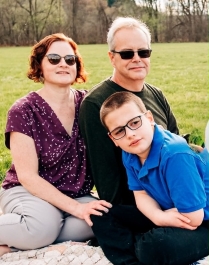
By Jaimie Hulin, pictured with son Camden and husband Clayton
Over the last several weeks, I have been drawing attention to the challenges rural families face when caring for a loved one with significant disabilities. My previous articles have focused primarily on children, but disability is not a childhood issue—it is a lifelong journey.
Most parents spend their children’s early years preparing them for independence. They celebrate first jobs, college acceptance letters, weddings, grandchildren, and eventually retirement. Parents of children with profound disabilities often spend those same years preparing for a very different future. They worry about guardianship, powers of attorney, long-term care, and who will love and protect their child when they are no longer able to do so themselves.
That reality is overwhelming.
Who will notice when your child isn’t acting like themselves? Who will recognize that a change in behavior might mean they’re in pain or becoming ill? Who will take the time to understand their routines, preferences, fears, and unique ways of communicating? And if your loved one cannot speak for themselves, who will know if someone is treating them poorly or if something is terribly wrong?
These are the questions that keep parents awake at night.
This is not a criticism of the compassionate caregivers who dedicate themselves to this work. Many are kind, patient, and genuinely committed to improving the lives of the people they support. But no caregiver, regardless of how caring they are, can replace the parent or family member who has spent decades learning every expression, every routine, every comfort, and every sign that something isn’t right.
Families can visit. They can bring their loved one home for holidays or outings. They can advocate from the outside. But it is not the same as being there every day.
And eventually, many parents begin asking the question they never wanted to face.

What happens when we’re gone?
I often joke with my husband that I’ve decided I’m simply going to live forever.
It’s half a joke.
It’s also one of the most honest things I’ve ever said.
Unfortunately, the reality is that there are not enough residential placements, day programs, respite providers, and support services to meet the needs that already exist—let alone the growing number of individuals who will need these services in the coming years.
The shortage is not the fault of the direct support professionals who do this difficult work. In fact, they are often asked to carry enormous responsibility for wages that barely reflect the importance of what they do. Many receive only limited initial training before being expected to care for individuals with complex medical, behavioral, and developmental needs. That is not a failure of the workers. It is a failure of a system that expects too much while providing too little.
A few years ago, I decided to become a respite provider. As both a teacher and the parent of a child with significant disabilities, I thought it would be a meaningful way to help another family while earning a little extra income.
The required training was surprisingly brief. Much of it covered concepts I already understood through my professional experience and my own life as a parent. I couldn’t help wondering how prepared someone without that background would feel after only a week’s worth of training before being entrusted with another family’s loved one.
I also encountered philosophies that sometimes prioritized chronological age over developmental ability. I absolutely believe adults with disabilities deserve dignity, respect, and opportunities to make choices. But I also know there are adults with profound developmental disabilities who cannot fully understand the consequences of every decision they make.
As a parent, I believe there is an important difference between respecting a person’s independence and abandoning the responsibility to guide and protect someone who cannot advocate for themselves. Finding that balance is far more complicated than simply saying, “They’re adults.”
When my training ended, I was issued a computer, connected to the payroll system, and told to wait for an assignment.
Weeks passed.
Then months.
No one ever called.
That experience left me with more questions than answers.
Families are routinely told there are not enough respite providers, leaving them without desperately needed breaks from the physical and emotional demands of caregiving. Yet here I was—a trained, approved provider—waiting for the opportunity to help, and the phone never rang. Eventually, I accepted a different part-time job.
I recognize that this is only one experience. No single story represents every agency, every provider, or every family. But it illustrates that the challenges facing rural disability services are often more complicated than they appear on the surface.
If approved families cannot receive respite…
If willing providers remain unused…
If direct support professionals are expected to shoulder tremendous responsibility with limited training and support…
Then perhaps the problem is not the dedication of the people involved.
Perhaps the problem is the system itself.
Rural families are not asking for perfection. We are asking for enough qualified caregivers, enough residential options, enough respite services, and enough support that parents can believe their sons and daughters will be safe after they’re gone.
Because every parent raising a child with significant disabilities knows one painful truth:
We will not live forever.
The question that follows us every single day is whether the systems we leave behind will be ready when we no longer can be.
Jamie Hulin is a Franklinville mother who understands the big picture and fine print when it comes to educating disabled children. She and her family have years of first hand experience and navigating the system in our state and region. You can reach her anytime, jlhulin@yahoo.com
Read Part 1, 2, and 3 of this important series: